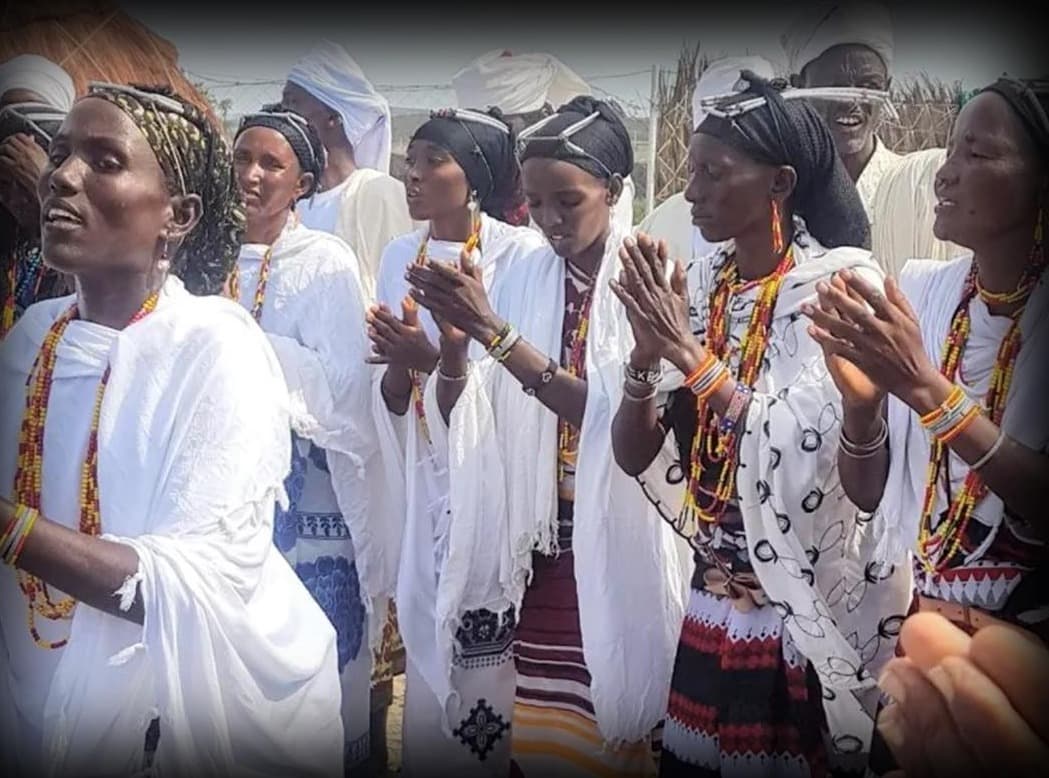
Isiolo Peace Actors Forum Engages 500+ Community Members
The Isiolo Peace Actors Forum convened its largest session to date, bringing together 500+ pastoral communities, women leaders, and youth from across 10 wards of Isiolo County to address resource-driven conflict and build durable inter-community trust.
In the ASALs of northern Kenya, conflict over land, water, and livestock is not an aberration. It is a structural feature of pastoral life — driven by climate variability, population growth, inadequate governance of shared resources, and historical grievances between communities. Managing this conflict, preventing its escalation, and building the inter-community relationships that make durable peace possible require sustained, inclusive, and locally-grounded engagement. This is what the Isiolo Peace Actors Forum was created to do.
The Forum's largest session to date brought together over 500 participants — community elders, women leaders, youth representatives, local administrators, religious leaders, and members of ASREP Africa's partner networks — from all 10 wards of Isiolo County. The session addressed resource-driven conflict dynamics, inter-community grievances, and the governance mechanisms that can prevent violence before it erupts.
The Nature of Pastoral Conflict
To understand why the Isiolo Peace Actors Forum matters, it is necessary to understand what peace in ASAL communities means and what threatens it. Pastoral conflict is typically triggered by competition over specific resources — a water point that has run dry, a grazing corridor that has been blocked by a new settlement, livestock that have been raided or have strayed across a community boundary. These are not abstract disputes. They are immediate, material, and often life-or-death for households whose survival depends entirely on the health of their herds.
Get field updates from Kenya's ASALs
Join our community of supporters receiving ASREP's latest news and impact stories.
Subscribe to updates →What makes pastoral conflict particularly difficult to resolve through conventional means is its seasonal and spatially distributed nature. Communities whose territories overlap may be at peace during the wet season and in active conflict during a prolonged dry season when water and pasture become scarce. The conflict is not between fixed enemies but between neighbours whose relationship oscillates with the climate.
"Peace in our communities is not a destination you arrive at once. It is something you tend every season, like a well that needs to be cleaned so the water flows clear."
How the Forum Works
The Isiolo Peace Actors Forum brings together what ASREP Africa calls "peace actors" — individuals and institutions that have credibility, relationships, and influence within their communities and across community boundaries. These include:
- Elected and appointed local government officials who can activate formal governance responses
- Traditional leaders and elders who hold authority in customary dispute resolution
- Women's group leaders who often serve as informal mediators and community intelligence networks
- Youth representatives who are frequently both victims and perpetrators of conflict
- Religious leaders from Christian and Muslim communities whose moral authority crosses ethnic lines
- Representatives of community-based organisations working on shared interests including water, land, and livestock
The Forum operates through a structured but participatory process. Each session begins with a mapping of current conflict hotspots — specific locations, specific communities, specific triggers. This intelligence is generated by participants themselves, drawing on their direct knowledge and relationships. ASREP Africa's team facilitates but does not direct: the analysis and the solutions emerge from the people present.
60% Women and Youth Participation
A consistent feature of the Isiolo Peace Actors Forum is the deliberate prioritisation of women and youth participation, who together represent more than 60% of Forum membership. This is not tokenism — it reflects a hard-won understanding that sustainable peace processes fail when they exclude the communities most affected by conflict and most invested in its resolution.
Women in pastoral communities often bear the greatest burden of conflict: they manage households when men are away with herds, they are disproportionately affected by resource scarcity, they frequently lose family members to inter-community violence, and they are primary agents of reconciliation within and between communities. Yet formal peace negotiations have historically excluded them.
The Forum changes this by making women's participation a structural requirement, not an aspiration. Ward-level women's peace networks feed into Forum sessions. Women's voices are explicitly sought in the mapping of conflict triggers and the design of prevention strategies.
PROCMURA Partnership
ASREP Africa's peacebuilding programme operates in partnership with the Programme for Christian-Muslim Relations in Africa (PROCMURA), whose interfaith networks provide a channel for peace messaging that crosses religious community boundaries. In Isiolo County, where both Christian and Muslim communities are present and occasionally implicated in conflict dynamics, PROCMURA's partnership is a practical asset.
Outcomes and the Path to Durable Peace
The Forum does not produce peace through declarations. It produces peace through relationships — by creating sustained, structured opportunities for people who might otherwise encounter each other only in conflict situations to engage in shared problem-solving. Over successive sessions, participants have mapped and intervened in multiple specific conflict hotspots, negotiated access agreements for shared water points, established early warning networks that have prevented at least two significant conflict escalations, and built inter-community relationships that have proven resilient when new triggers have emerged.
ASREP Africa's conviction is that durable peace in Kenya's ASALs requires exactly this kind of locally-rooted, sustained, and inclusive engagement — and that organisations anchored in the communities they serve are uniquely positioned to provide it. The Forum's growth to 500+ participants across all 10 wards of Isiolo County is evidence that this conviction resonates with the communities themselves.
Learn more about ASREP Africa's peacebuilding programme and the work being done to build durable peace in Kenya's pastoral communities.
Share this story
